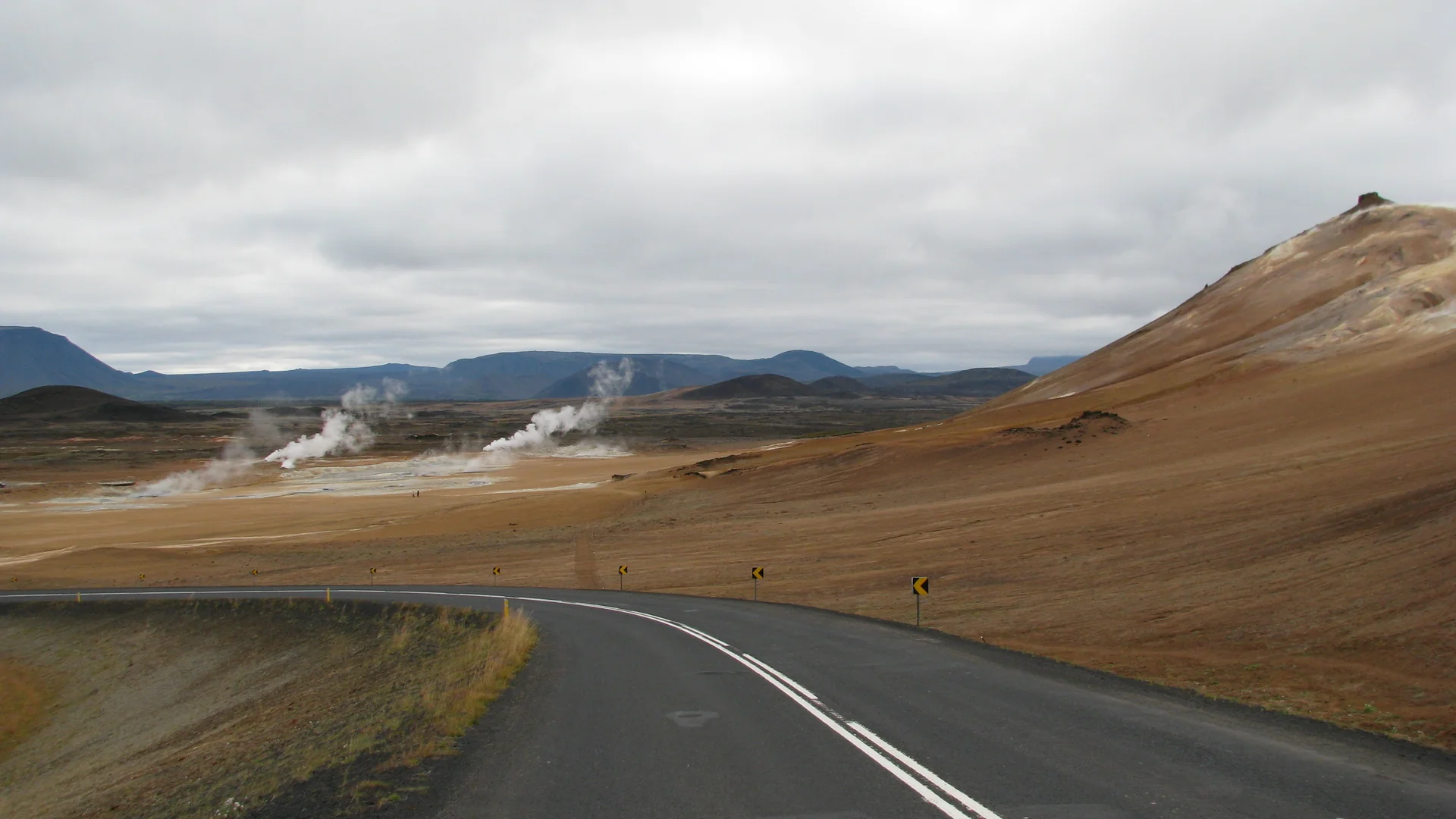
A geothermal landscape near Lake Mývatn where boiling mud pools erupt, sulfur vents hiss, and the earth is stained yellow, orange, and rust in one of Iceland's most alien environments.
Hverir does not smell like anywhere else on Earth. The sulfur reaches you before the landscape does — a sharp, acrid presence that intensifies as you approach the fumaroles and mud pools spread across the floor of the Námafjall geothermal field. By the time you are among them, the smell has become a feature rather than an intrusion, part of the identity of the place.
The ground here is coloured in yellows and oranges and rust-reds from sulfur, iron oxide, and silica deposits. Steam vents blast from cracks in the earth with a force that varies from a whisper to a roar, their temperatures reaching 200°C. The mud pools — fumaroles partially filled with water — bubble and boil with a slow, thick rhythm, each pool its own shade of grey and blue. Some spit mud. Some simply breathe.
The landscape exists at the junction of the North American and Eurasian tectonic plates, which are pulling apart here at approximately 2 centimetres per year. The volcanic activity that fuels Hverir is the direct product of that separation — magma rising to fill the gap, heating the groundwater, driving the whole system.
Looking across Hverir at dawn, with the steam catching the low light and the coloured ground glowing, it is difficult to avoid the feeling that you have arrived somewhere geological time has not finished with. The earth here is still in negotiation with what it wants to become.