A series of marble caves sculpted into swirling blue and white formations on an island in General Carrera Lake — the turquoise glacial waters have carved the calcium carbonate over six thousand years, and their color reflects off the cave walls, making the interior seem lit from within.
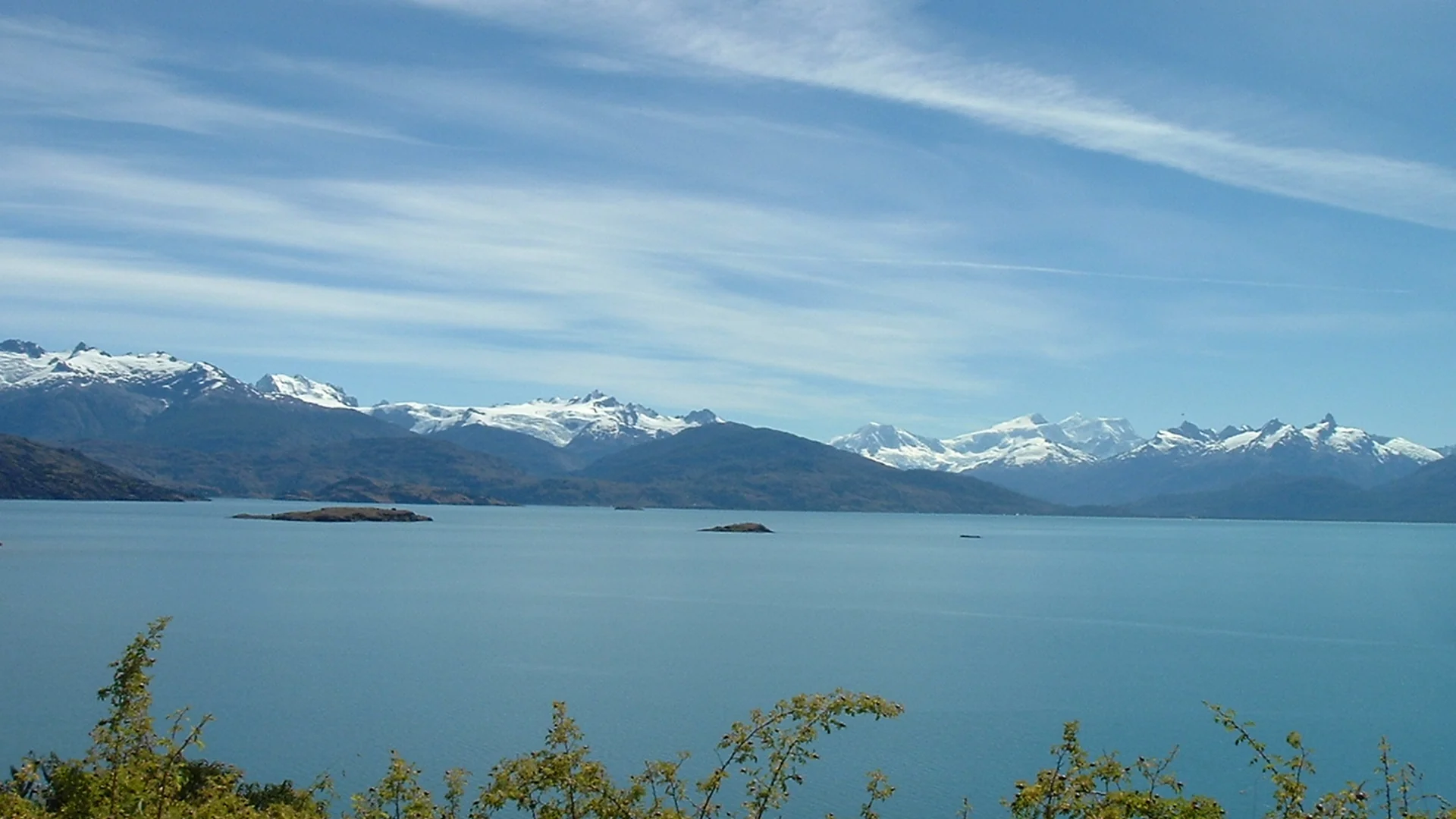
General Carrera Lake sits in the Patagonian Andes, straddling the Chilean-Argentine border. It is one of the deepest lakes in South America. Its water is extraordinarily cold, extraordinarily clear, and colored an intense turquoise by glacial silt suspended in the water column — the same glacial flour that gives so many Andean lakes their impossible color.
On the Chilean side of the lake, near the village of Puerto Río Tranquilo, a small island and adjacent peninsula are made of solid marble — calcium carbonate laid down in ancient shallow seas, metamorphosed by heat and pressure over hundreds of millions of years. The lake has been eroding this marble for six thousand years, since the end of the last glaciation when the lake reached its current level.
The result is the Marble Caverns: a network of caves, arches, and tunnels carved into the white-and-grey-banded marble, accessible only by small boat. Inside the caves, the turquoise light from the lake reflects off the walls. The marble has been sculpted into smooth curves and swirling patterns that record the motion of water at different lake levels across millennia. The cave walls glow in shades of blue, turquoise, and white, without any artificial lighting.
Access depends entirely on lake conditions. In calm weather, boats can enter the caves; in wind, the lake becomes too rough. The Carretera Austral — Chile''s Route 7, one of the world''s great road journeys — passes through this region, making the Marble Caverns accessible to anyone who has driven the Patagonian highway. But the weather and the lake''s temperament ultimately decide what you see.