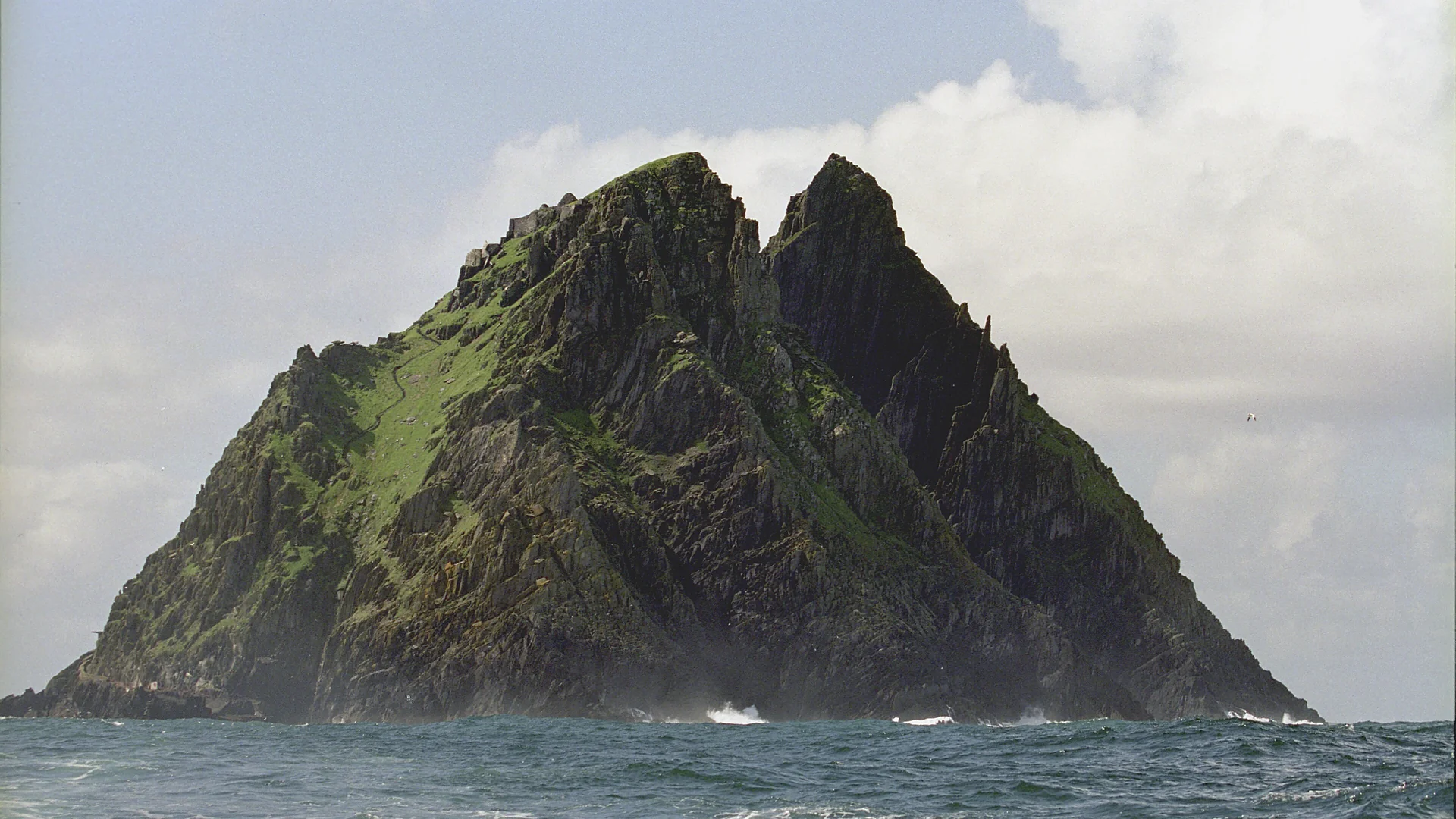
A pyramidal rock rising 218 metres from the Atlantic Ocean off the Kerry coast, bearing a perfectly preserved early Christian monastery reached by 600 steps carved into the cliff face.
To stand on Skellig Michael is to stand on the edge of the early medieval world — the furthest outpost of European Christianity, a pinnacle of rock chosen by monks in the 6th century who wanted to be as far from the world as it was possible to be while remaining within it.
The island rises 218 metres from the North Atlantic, 12 kilometres off the Kerry coast. It is not a gentle rock. The crossing to it in a small boat takes 45 minutes under conditions that are frequently violent — the Atlantic does not moderate itself for Skellig pilgrimages. The island has no harbour, just a concrete landing platform where the boat holds while passengers scramble onto the stone.
The 600 steps cut into the rock face over 1,400 years ago ascend in a series of flights, some vertical, all exposed to the wind and spray from the ocean below. At the top, inside a series of enclosures protected by stone walls, stand the beehive cells — corbelled dry-stone structures, dome-shaped, their interiors surprisingly dry and warm after 14 centuries of Atlantic exposure. The monks who inhabited these cells, from roughly 588 CE to the 12th century, chose this place not despite its harshness but because of it. Hardship was the point.
The monastery is perfectly preserved. No mortar, no concrete, no modern material has touched it. Puffins nest in the stone enclosures now, unbothered by the tourists who share the summit with them. The monks left in the 12th century. The puffins did not.