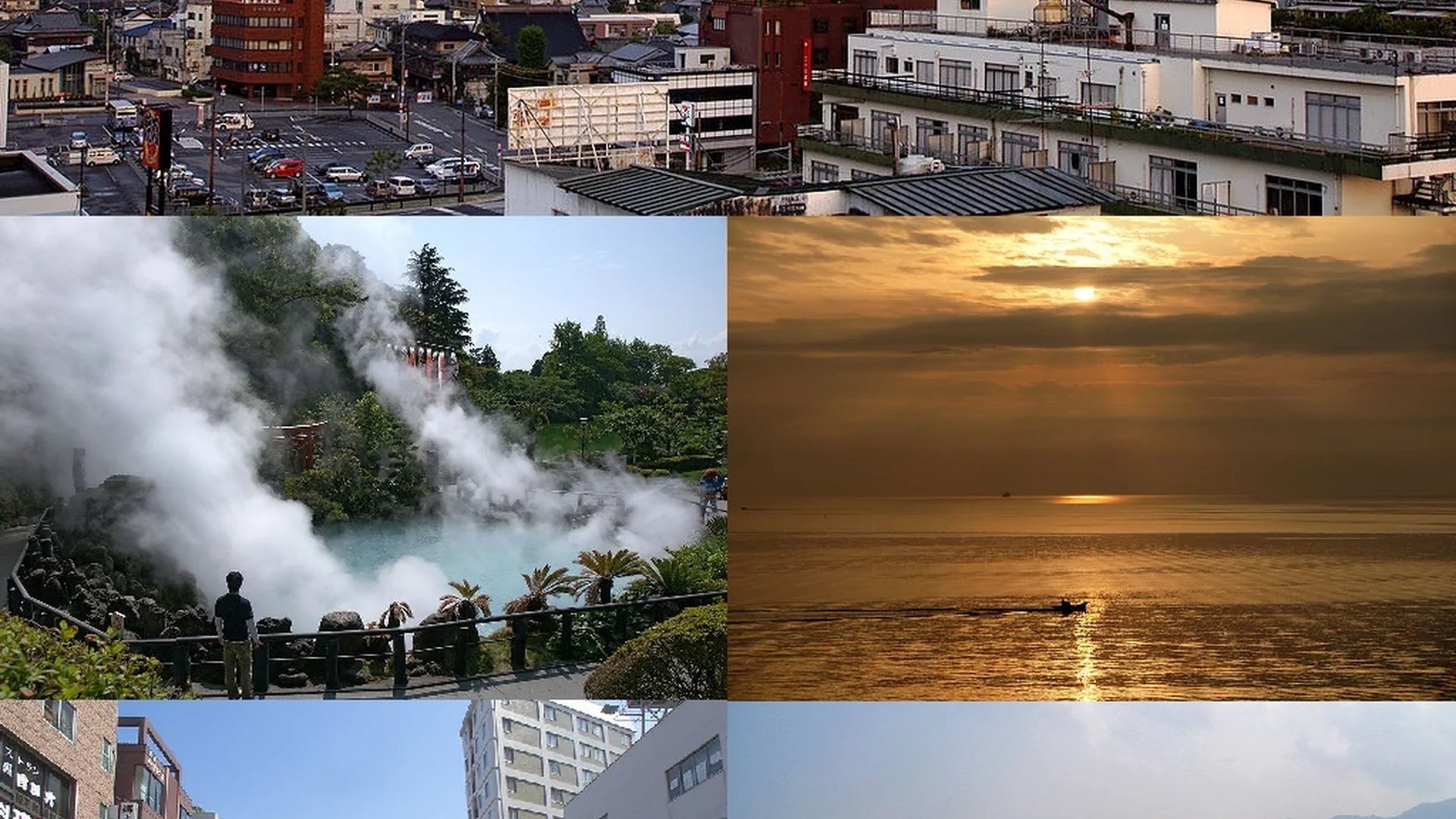
A cluster of geothermal hot springs in Kyushu so violently active that Japanese residents named them jigoku — hells — each one a different colour and character.
Beppu is the most active geothermal city in Japan and arguably in Asia. It sits on a volcanic system that releases 130,000 tonnes of hot water and steam per day — a figure visible from any approach as columns of white vapor rising above the city. The city has hot springs in its streets, parks, and back gardens. Residents cook eggs and sweet potatoes directly in geothermal steam.
But the Hells are different. The nine jigoku — literally, the nine hells — are geothermal springs too hot and chemically extreme to bathe in, clustered in the Kannawa district. Each has a distinct personality determined by its mineral composition.
Umi Jigoku — the Sea Hell — is the largest: a cobalt-blue pool at 98°C, the colour produced by dissolved cobalt chloride, with steam rising continuously from its surface. Chinoike Jigoku — Blood Pond Hell — is iron-red from iron oxide and clay, its surface a deep rust colour that bleeds into the surrounding ground. Tatsumaki Jigoku contains a geyser that erupts every 30 to 40 minutes. Oniyama Jigoku — Devil''s Mountain Hell — has crocodiles in pens heated by the geothermal waters.
The Japanese relationship with these springs is entirely comfortable. The hells are a tourist attraction and have been for over a thousand years. Hell, apparently, is more interesting than heaven.