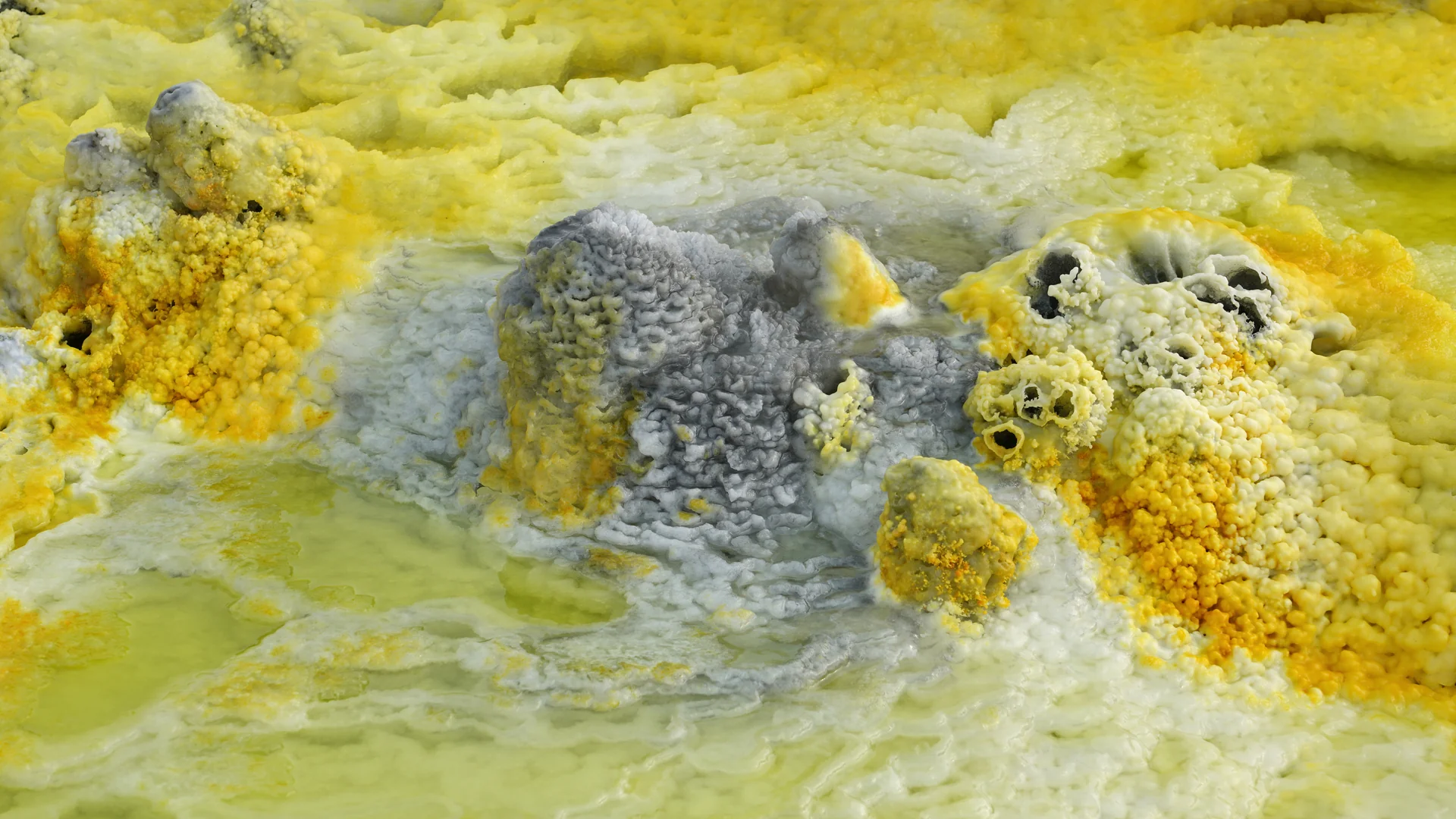
A volcanic crater in the Danakil Depression, 48 metres below sea level, where hydrothermal vents create pools of sulphuric acid and salt formations in electric yellows, greens, and oranges — the most alien landscape on Earth.
Dallol sits 48 metres below sea level in the Danakil Depression of northern Ethiopia — one of the lowest, hottest, most inhospitable places on Earth''s surface. The average annual temperature is 34.4°C, and this is the average. The summer heat reaches 50°C. The ground itself is hostile: sulphuric acid pools, salt columns, hydrothermal vents releasing toxic gases. The landscape is yellow and orange and green in colours so saturated that photographs of it are regularly assumed to be false-colour processed.
They are not. The colours are real. The hydrothermal system beneath Dallol is heated by a magma intrusion very close to the surface, and the mineral-rich water that rises through the vents deposits thick crusts of salt and sulphur in formations that look like alien coral — columns, mushroom shapes, rippled pools edged in neon green from halophile bacteria that survive in the acid.
The Afar people have mined salt from this area for centuries. They travel here on camel trains, cutting blocks of salt from the surface and carrying them to markets hundreds of kilometres away. They are, by any measure, accustomed to extreme environments. Even the Afar do not linger at Dallol.
There is no permanent settlement. The gases are toxic. The ground can give way into pools of acid. The heat is survivable only in short exposures. Scientists who study the site work in shifts, and the window of access each year is narrow. The colour remains regardless of the season, regardless of whether anyone is present to witness it.