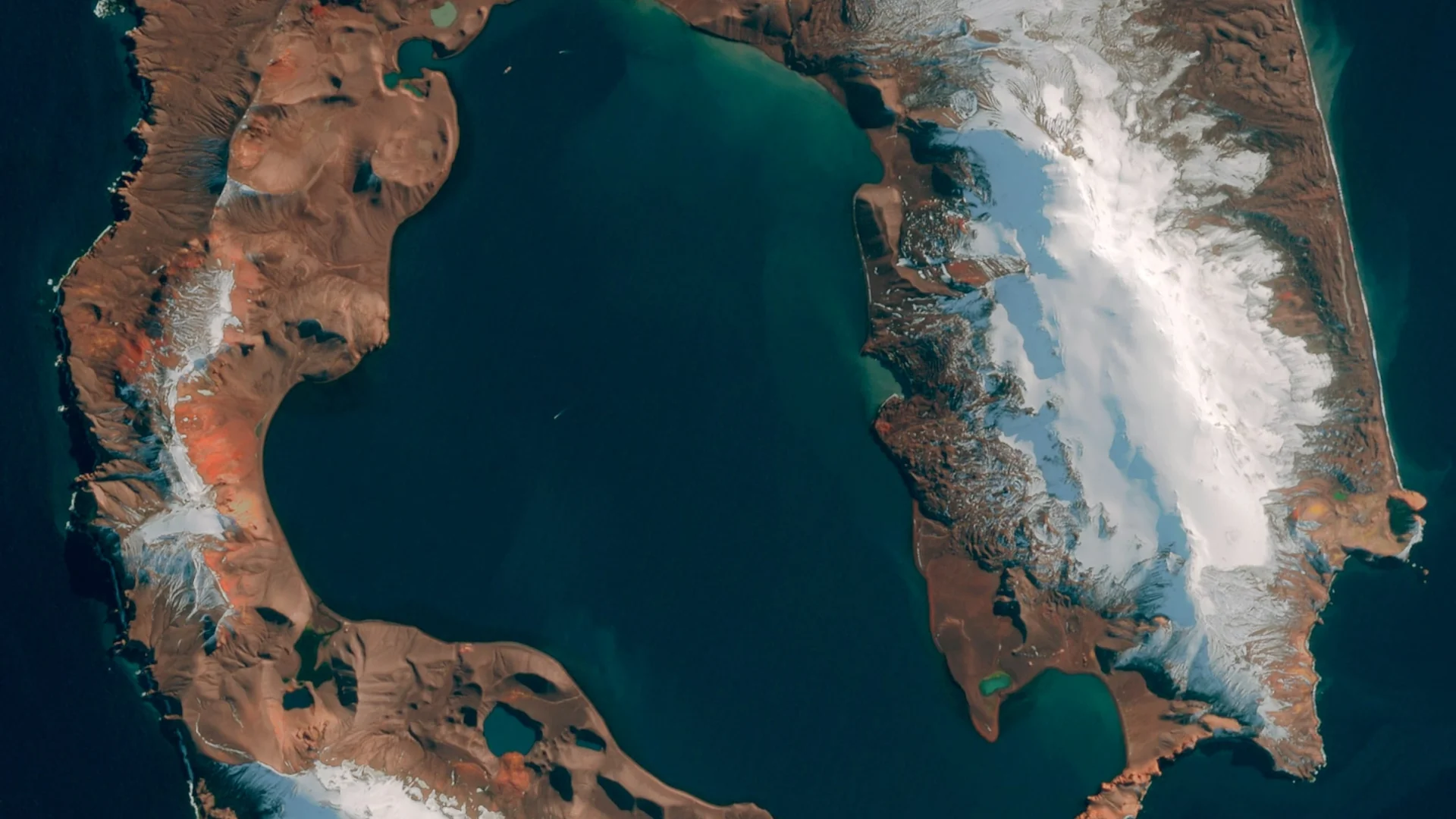
A horseshoe-shaped volcanic caldera in Antarctica where ships navigate through a narrow gap in the crater wall and anchor inside an active volcano.
On a navigation chart, Deception Island looks unremarkable — a roughly circular landmass in the South Shetland Islands, off the Antarctic Peninsula. But the chart reveals something else on closer inspection: the island has a gap in its southern rim. Ships pass through that gap. Inside, they find a harbour.
The harbour is the caldera of an active stratovolcano. Whalers discovered the passage — named Neptune''s Bellows — in the 19th century and recognized the sheltered anchorage it provided. They named the island for how it deceived ships: presenting an unremarkable exterior while concealing a perfect natural harbor within.
For decades it was a whaling station. Rusting boilers, whale oil tanks, and the collapsed bones of hundreds of carcasses still lie on the black sand beaches inside the caldera. Penguin colonies nest among the wreckage, apparently undisturbed by the desolation surrounding them. Abandoned aircraft hangars from the British military base have half-collapsed under the weight of volcanic ash from the island''s last major eruption in 1970.
The volcano is not dormant. Fumaroles steam from the black beaches. In one bay — Pendulum Cove — the geothermal heat warms the water enough to swim in, surrounded by Antarctic ice and the bones of the old station. The water temperature oscillates. Sometimes it gets hotter without warning. The mountain beneath has not finished.