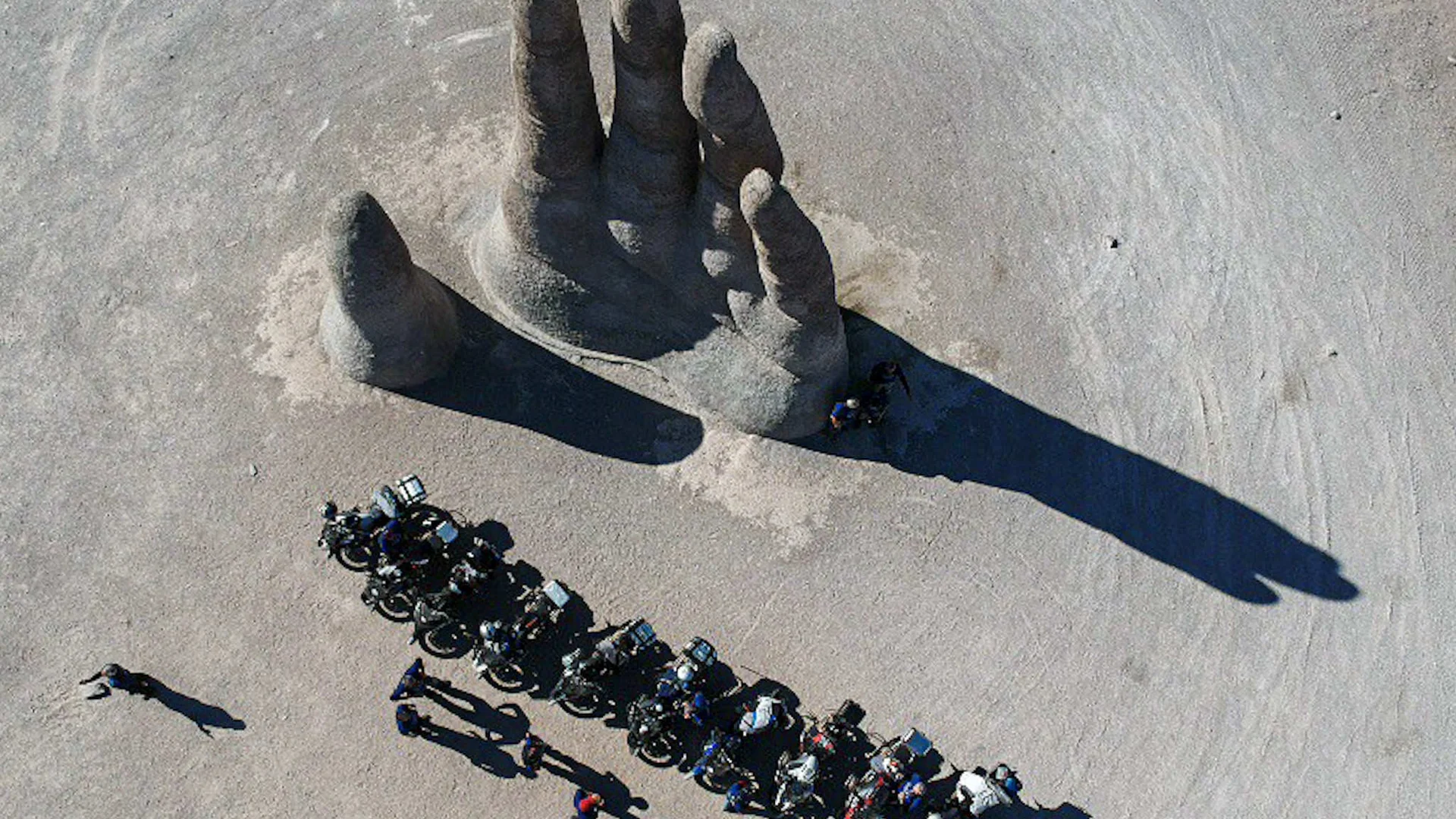
Mario Irarrázabal's 11-metre steel sculpture of a human hand emerges from the salt flats of the Atacama Desert, fingers outstretched — a monument to human isolation and vulnerability.
There is nothing for many kilometres in any direction when you first see it. The Pan-American Highway runs through the Atacama salt flats between Antofagasta and Iquique, and the desert beside it is flat, brown, and absolute. Then a hand appears above the horizon line.
Chilean sculptor Mario Irarrázabal placed it here in 1992. The sculpture is 11 metres tall, built of iron rebar and concrete, the fingers slightly bent as if reaching upward or grasping at something just beyond reach. From a distance it looks like it is emerging from the earth rather than standing upon it — a body below the surface, only the hand visible, straining upward.
Irarrázabal has said it represents human vulnerability and helplessness — the smallness of the human against the scale of the world. There are similar works of his in Uruguay and Spain, but none placed with the same brutal clarity of context. In Madrid, a hand in a park is public art. In the Atacama, at 1,100 metres above sea level, surrounded by one of the most desolate and life-hostile environments on Earth, the same gesture becomes something else entirely.
Tourists stop their cars on the highway. They walk across the salt to stand beside it. Beside the hand, a person is knee-height. The palm above their heads is weathered red-brown from the Atacama sun and wind. The fingers point at nothing visible. The desert surrounds them on every side. The effect is exactly what Irarrázabal intended: to make you feel, for a moment, precisely as small as you are.