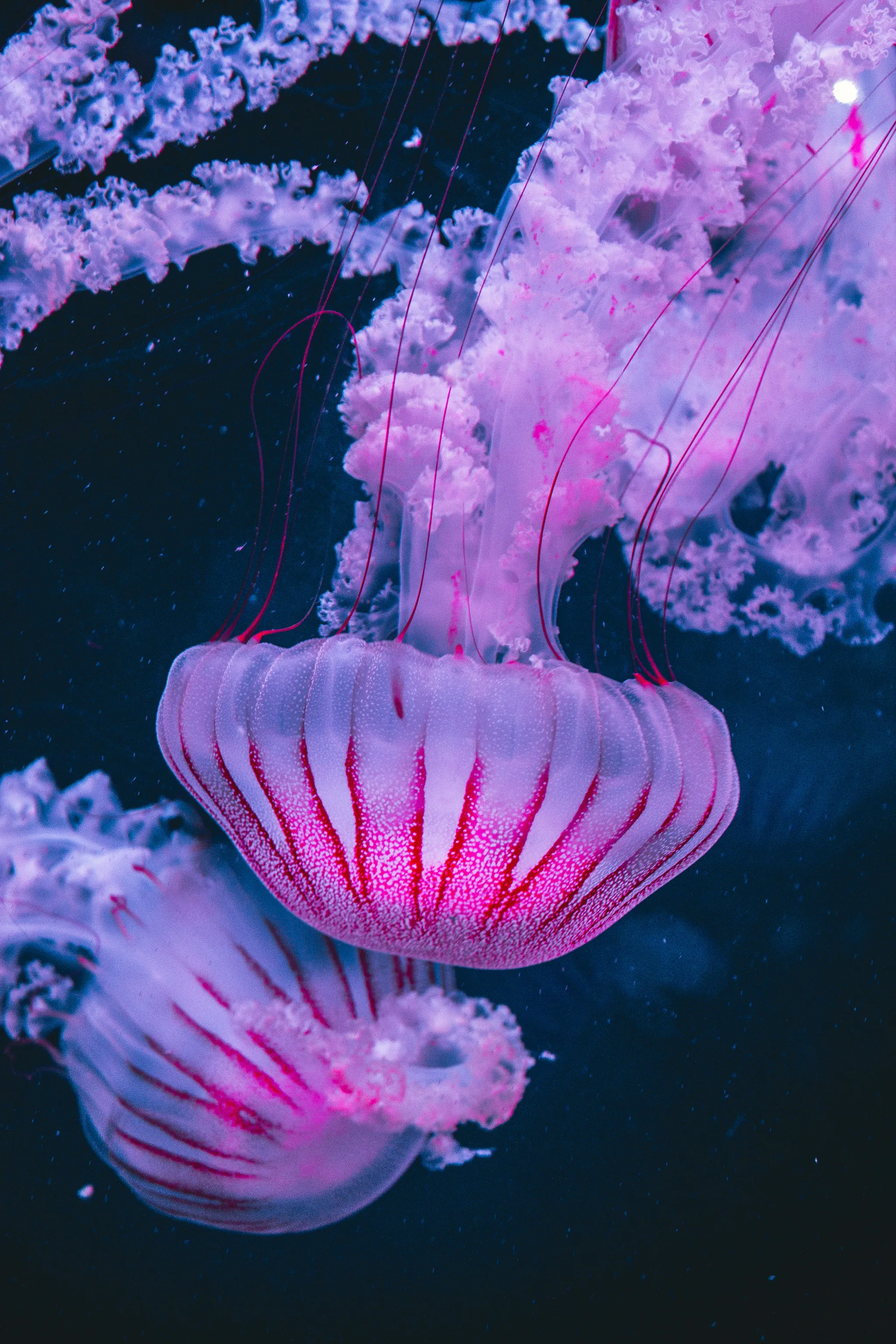
A marine lake on Palau's Eil Malk island populated by millions of golden jellyfish that evolved to lose their sting — swimming among them is like drifting through a warm, pulsing, otherworldly galaxy.
Ten thousand years ago, rising sea levels trapped a pocket of seawater in a limestone basin on Eil Malk island, in what is now the Rock Islands of Palau. Isolated from the ocean, cut off from predators and the evolutionary pressures of the open reef, the marine population left inside was subject to an entirely different set of conditions. Over millennia, natural selection produced a species found nowhere else on Earth: Mastigias papua etpisoni — the golden jellyfish of Jellyfish Lake — which evolved to lose the stinging cells that its ocean-dwelling relatives use for defense and prey capture.
The lake now contains an estimated five to thirteen million of these jellyfish, depending on season and water temperature. Each day, the entire population migrates from the lake's eastern end to its western end following the sun — the jellyfish sustain a symbiotic relationship with photosynthetic algae living in their tissues, and they orient themselves to maximize light exposure. At dusk, they migrate back. This daily transit has been documented for decades. Watching it from water level — floating in the warm surface layer as millions of translucent golden bodies pulse in every direction simultaneously — is one of the most disorienting wildlife encounters available anywhere on Earth.
The water in Jellyfish Lake is thermally stratified. The upper layer, warm and oxygenated, is where the jellyfish concentrate. Below approximately 15 meters lies a chemocline — a sharp boundary below which the water becomes anoxic and loaded with hydrogen sulfide, produced by anaerobic bacteria and toxic to humans. Divers are restricted to the upper layer. Snorkeling is the standard way to experience the lake, and it is more than sufficient: the jellyfish aggregate where the sunlight reaches, and that is where the visitor is.
The golden jellyfish population collapsed entirely in 1998, during the El Niño warming event that bleached and killed much of Palau's reef system. The lake water warmed beyond the jellyfish's tolerance range and the population crashed from millions to essentially zero. The lake was closed. Over the following decade, as water temperatures normalized, the population recovered. A second closure occurred in 2016 during another warming event; the lake reopened to swimmers in 2019, with the population again in the tens of millions.
The jellyfish are the size of grapefruits. They pulse with a slow, ineffective rhythm — not enough to go anywhere quickly, just enough to stay oriented toward the light. Without stinging cells, there is nothing threatening about contact. The correct way to experience Jellyfish Lake is to float still and let the current of their passing move you. In every direction, as far as visibility allows, the lake fills with pulsing amber light. Outside the lake, you would call it impossible. Inside it, it is simply what the water does.
Safety information
Safety information is not available yet.
Before visiting this place, check current safety guidance, access rules, local restrictions, and official updates on other trusted websites. Our editorial team does not have verified safety information for this location at the moment; it will appear here later.