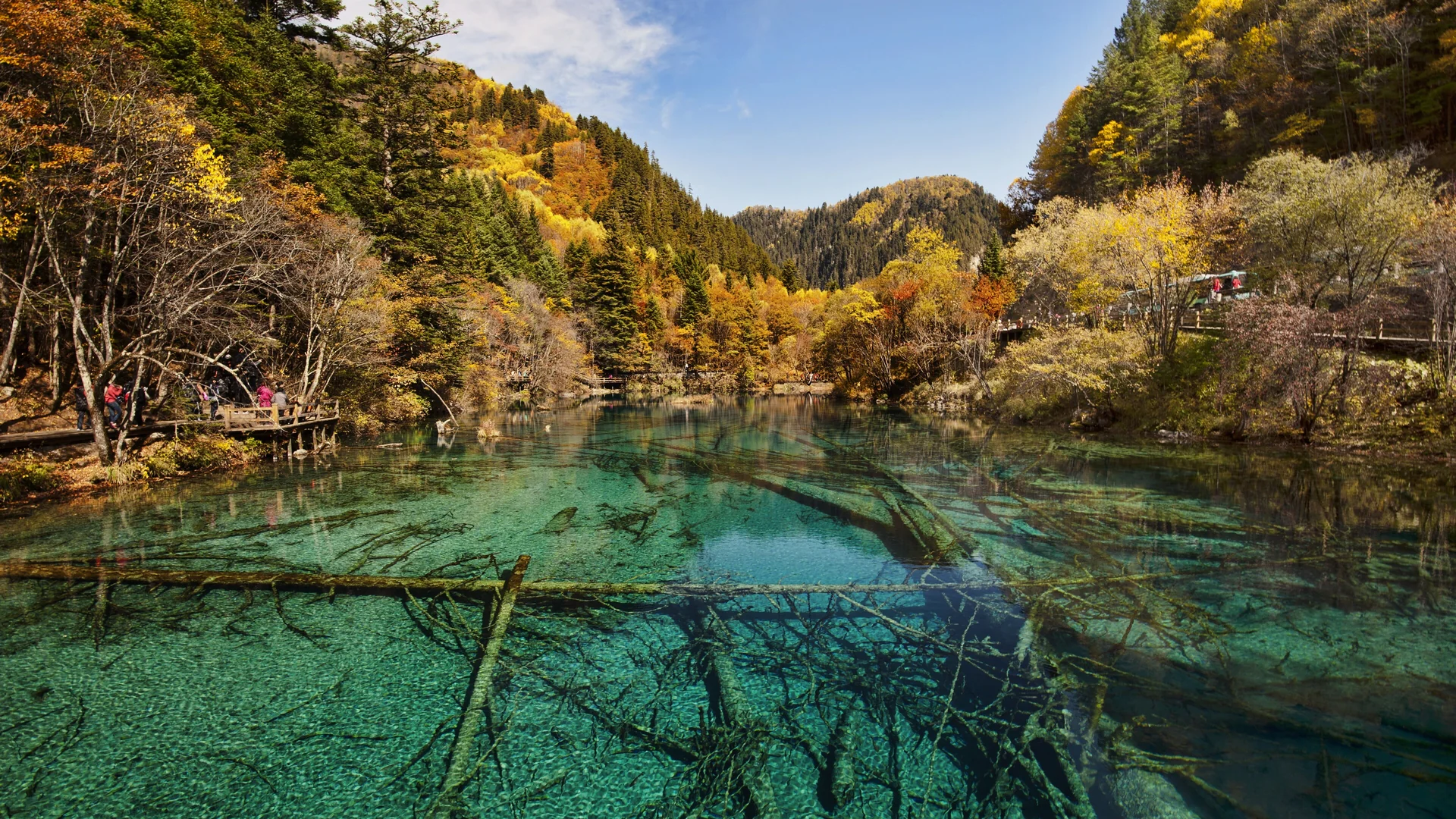
A UNESCO World Heritage valley in Sichuan where 108 lakes glow in colours from turquoise to deep jade to cobalt — each one a different shade, fed by mineral-rich glacial waters.
The name means Valley of Nine Villages — a reference to the nine Tibetan communities that once inhabited this valley in the Minshan mountain range of northern Sichuan. The villages are gone, their residents relocated when the area became a national park. What remains is the water.
There are 108 named lakes in Jiuzhaigou, arranged along three valleys that branch from a single central point. Each lake is a different colour. The variation comes from differences in mineral content, depth, algae populations, and the angle of surrounding mountains that shade or illuminate the water at different hours. The shallowest lakes are clear with white calcium carbonate sediment visible on the bottom, giving them a pale turquoise. Medium-depth lakes read as brilliant jade. The deepest show cobalt and indigo.
The colours do not look real. Every visitor who sees them for the first time experiences the same cognitive adjustment — the colours register as digitally saturated, as if someone had applied a filter. They have not. The calcium carbonate that precipitates from the glacial meltwater is genuinely white, the mineral content genuinely produces these wavelengths. Photography, paradoxically, tends to undersell the colour rather than exaggerate it.
Waterfalls connect many of the lakes, some falling 78 metres into pools below. A 2017 earthquake temporarily disrupted the water chemistry of several lakes, changing their colours. The lakes are recovering — chemistry rebalancing, colour returning — as if the valley itself is healing.