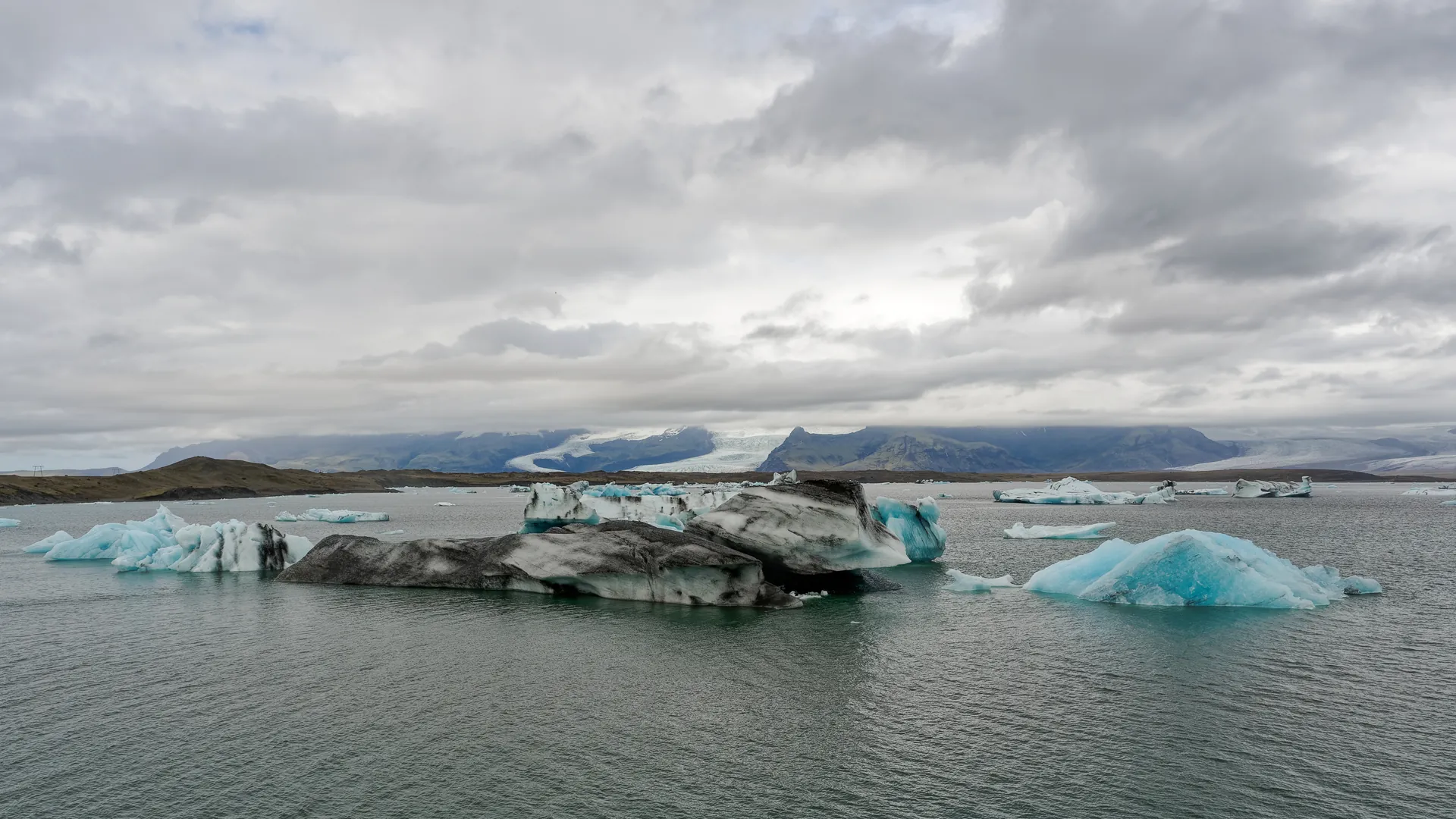
A glacial lagoon at the edge of Vatnajökull — Europe''s largest glacier — where icebergs calved from the Breiðamerkurjökull glacier drift through deep blue water before floating out to sea, each a different shape and shade of blue, white, and black from embedded volcanic ash.
Jökulsárlón did not exist a century ago. In 1935, the Breiðamerkurjökull glacier — an outlet glacier of the vast Vatnajökull ice cap — extended to the coast. As the glacier retreated through the 20th century, it revealed a depression in the bedrock behind its terminus. The depression filled with meltwater, creating a lagoon. As the glacier has continued to retreat, the lagoon has grown — from 7 square kilometers in 1975 to over 20 square kilometers today.
The icebergs that float in the lagoon are calved directly from the glacier''s active face. In summer, you can watch the face collapse — a crack, a groan, and a section of ice the size of a building detaches and falls into the water, creating a wave and a roar. The new iceberg bobs upright, rolls, settles, and joins the others drifting slowly toward the outlet channel.
The colors in the ice are the result of different types of compression and contamination. Highly compressed ancient ice appears deep blue; the density of the ice absorbs red wavelengths of light and transmits blue ones. Ice containing volcanic ash — from the many eruptions that have occurred beneath Vatnajökull over millennia — appears black or dark grey in streaks and bands. Some icebergs are white, some blue, some striped, some translucent.
The outlet channel connects the lagoon to the Atlantic. Icebergs that reach it are carried out by the tidal current and deposited on the black volcanic sand of Diamond Beach, where they lie until they melt. The beach takes its name from the way the ice fragments glow against the dark sand, catching the low Icelandic sun.
The lagoon appears in James Bond films, in Batman Begins, and in countless travel photographs. None of them prepare you for the scale or the cold or the sound of ice moving.
Safety information
Safety information is not available yet.
Before visiting this place, check current safety guidance, access rules, local restrictions, and official updates on other trusted websites. Our editorial team does not have verified safety information for this location at the moment; it will appear here later.