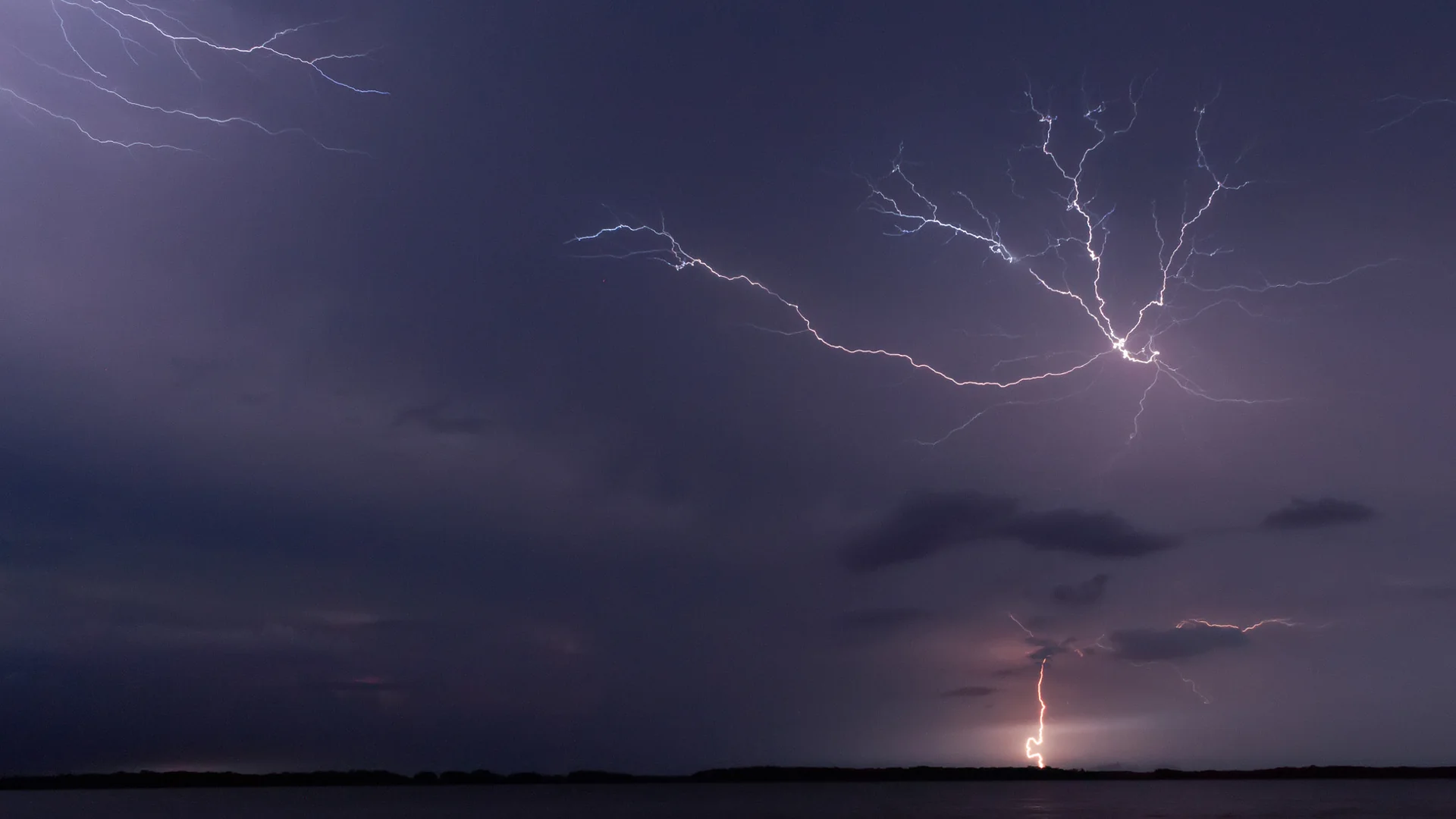
Where the Catatumbo River meets Lake Maracaibo, an atmospheric anomaly generates continuous lightning storms that flash 280 nights per year — visible from 400 kilometres away.
Sailors in the 16th century called it the Lighthouse of Maracaibo. They could navigate by it across hundreds of kilometres of Caribbean Sea. It has not stopped since they first recorded it. It may never stop.
At the mouth of the Catatumbo River, where hot tropical air pushes in from the lake and cold winds descend from the Andes, a permanent atmospheric collision creates the world''s most intense lightning zone. The storms materialize each evening, building through sunset, then exploding across the sky. Up to 40,000 lightning bolts per night. As many as 28 strikes per minute at the peak.
This is not occasional. It is relentless. The Catatumbo fires for up to 260 nights a year, sometimes for 10 hours continuously. Scientists have measured it as generating more atmospheric ozone than any other single location on Earth.
Local fishermen and indigenous Barí people who have lived along the riverbank for generations regard it as entirely normal — a permanent feature of the sky, as expected as the sun. There are stories of it going dark for a few months in 1906, following an earthquake, and then in 2010 during a severe drought. Both times, the world noticed only when it returned.