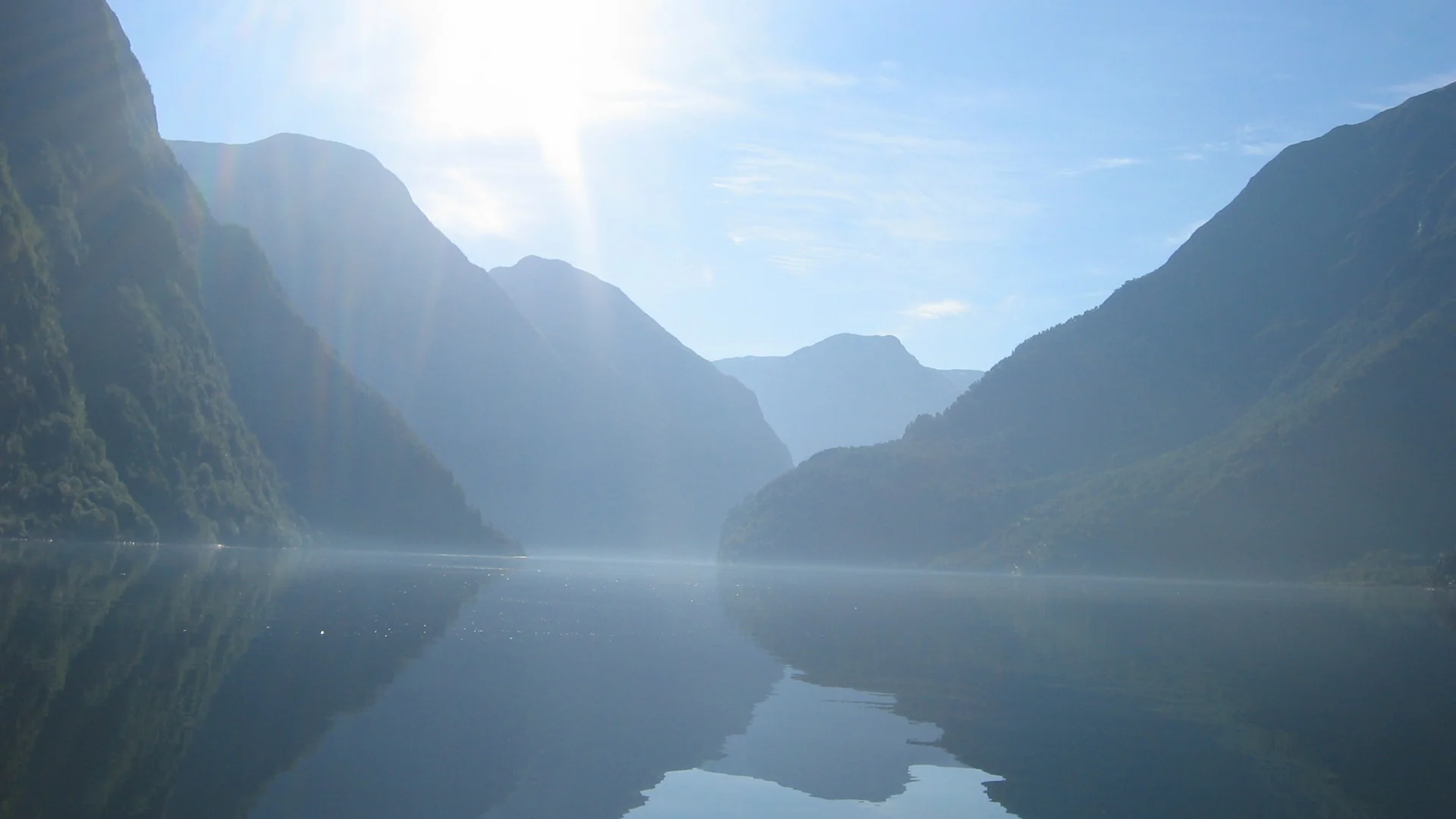
A UNESCO-listed fjord so narrow that sunlight only reaches the water for a few hours in winter, its walls rising 1,700 metres above a channel just 250 metres wide — the most dramatic fjord in Norway.
The Nærøyfjord is 17 kilometres long and, at its narrowest point, 250 metres wide. The walls on either side rise 1,700 metres. The arithmetic of this produces something unexpected: in winter, sunlight reaches the water at the bottom for only a few hours per day, and in some weeks, not at all. The cliffs catch the sun before it reaches the fjord. Down at water level, you travel in a kind of perpetual shade.
The fjord was carved by glaciers over hundreds of thousands of years, the ice cutting down through the rock as it advanced and retreated. What it left behind is so exaggerated — so far beyond what seems necessary to illustrate the word fjord — that it functions as a kind of proof of concept, an argument for the extremity of geological process.
Waterfalls descend from the clifftops in thin white threads that become misty and diffuse long before they reach the water below. Farms cling to ledges 300 metres up the walls, accessible only by boat or by ladders once fixed into the rock face. The farms are mostly abandoned now. The ladders remain.
In summer, the fjord fills with cruise ships and kayakers, the green water crowded, the silence gone. The best time to understand what Nærøyfjord actually is — its true nature, its relationship to scale — is in November, when the tour boats stop running and the only sound is water and the occasional avalanche on the upper walls.