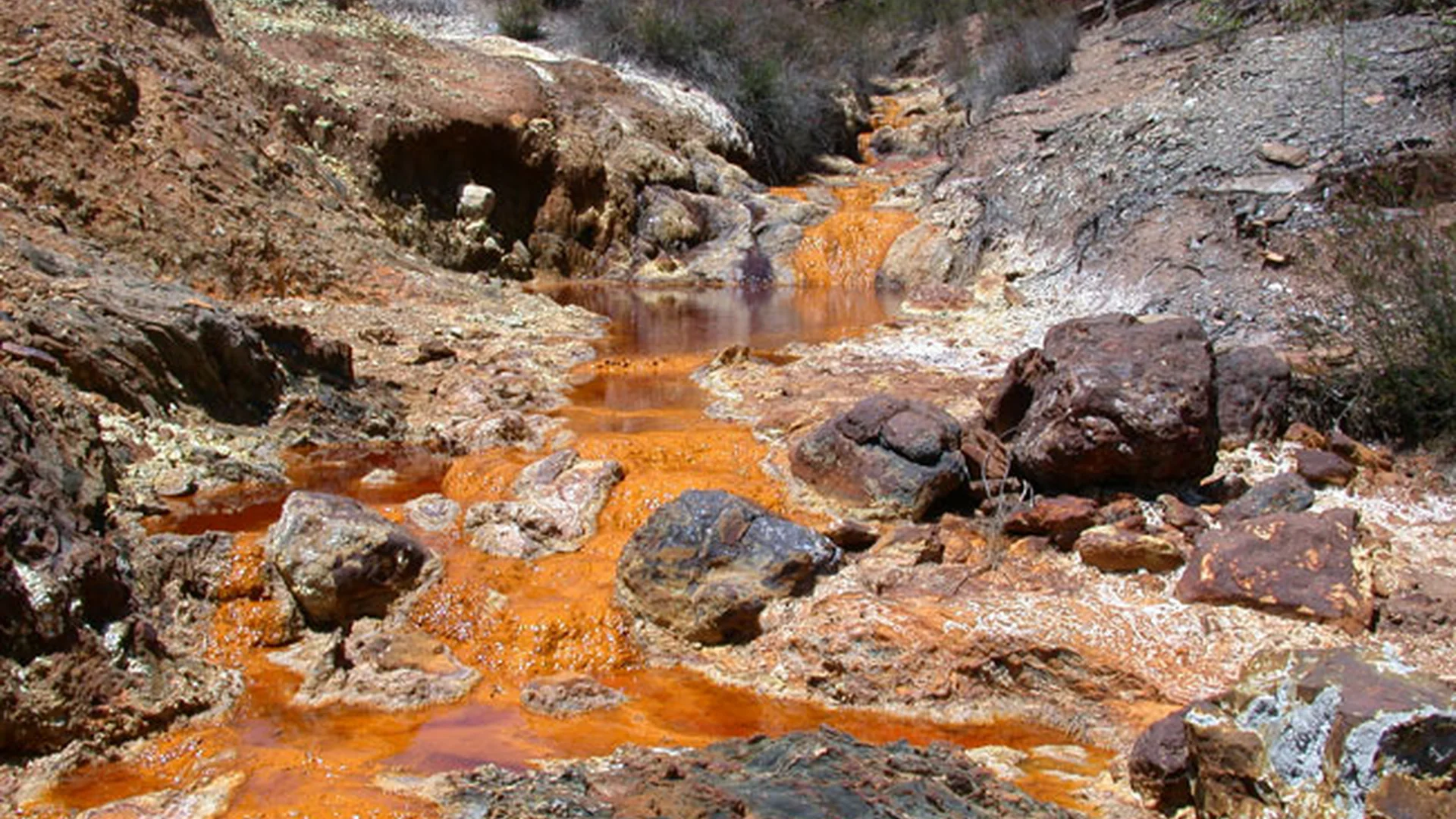
An ancient acid river in Andalusia whose blood-red waters host extremophile organisms found nowhere else on Earth — the closest terrestrial analog to early Mars.
From above, the Río Tinto looks like a wound in the earth that never healed. Its waters are the deep red of oxidized iron, shading to orange and rust, flowing with a viscosity that seems thicker than water should be. Its pH measures between 1.7 and 2.5 — more acidic than vinegar. Nothing should live in it.
But something does. The river is teeming with extremophile microorganisms — bacteria, archaea, and fungi that metabolize iron and sulfur rather than oxygen, thriving in conditions that would destroy most life within minutes. Scientists studying them are not studying curiosities. They are studying a blueprint.
Mars, four billion years ago, was a world of liquid water, iron-rich rock, and acidic chemistry. The Río Tinto is what that world''s rivers may have looked like. Astrobiologists have come here for decades to understand what biosignatures to search for on the Martian surface — what living organisms look like when they have adapted to acidic iron chemistry rather than oxygen-rich water.
The red colour comes from dissolved ferric iron — the same iron that rusts metal. Mining operations have extracted copper, silver, gold, and iron from this valley since Phoenician times, over 5,000 years ago. The mining never ended entirely. But the river predates all of it by hundreds of millions of years. It was running red before there were eyes to see it.