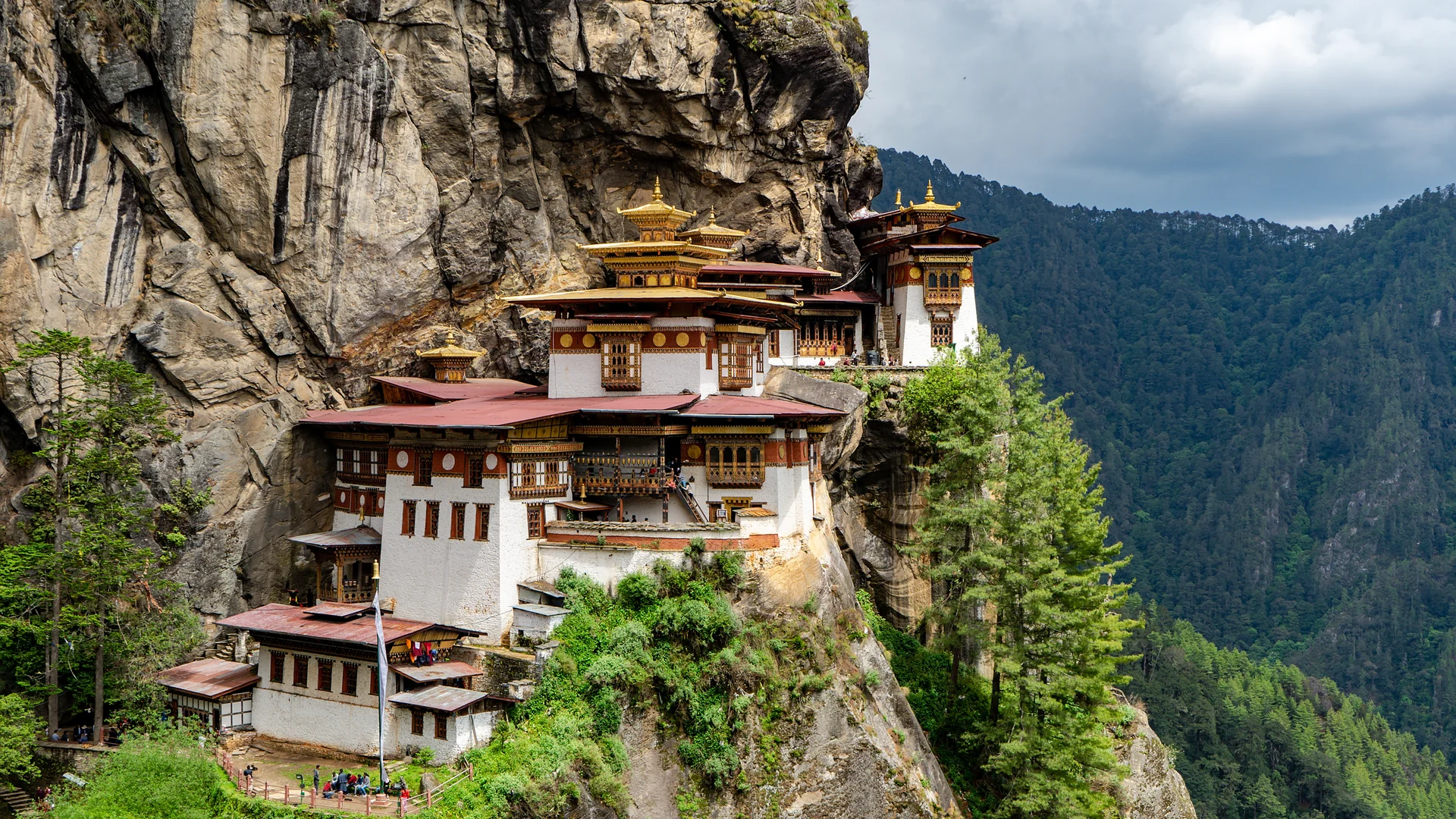
The Tiger's Nest monastery clings to a sheer cliff face 900 metres above the Paro Valley, built in 1692 on a site where a saint is said to have meditated inside a tiger.
In the 8th century, the Tantric master Padmasambhava — revered across the Buddhist world as Guru Rinpoche — flew to this cliff on the back of a tigress. He meditated in a cave in the rock face for three months, three weeks, three days, and three hours, subduing the demons of the valley. The cave still exists, deep within the monastery walls.
A thousand years later, in 1692, a monastery was built around that cave. How construction was possible on a vertical cliff face 900 metres above the valley floor, using 17th-century Bhutanese technology, is a question that the structures themselves answer only partially. The answer involves ropes, faith, and methods that have been lost.
Paro Taktsang — the Tiger''s Nest — clings to the rock as if grown from it rather than built upon it. Its white and ochre walls cascade down the cliff in layers, connected by bridges over vertical drops. Prayer flags stream from every surface. Looking at it from across the valley, your mind insists it cannot be real.
The hike to reach it climbs through pine forest and rhododendron groves, gaining 900 vertical metres in 5 kilometres. Every step of the ascent reveals a different perspective of the structure above. Most visitors fall silent when they arrive — not from exhaustion, but from the accumulated effect of standing where Guru Rinpoche once stood, inside a building that chose an impossible place and has occupied it for three centuries.