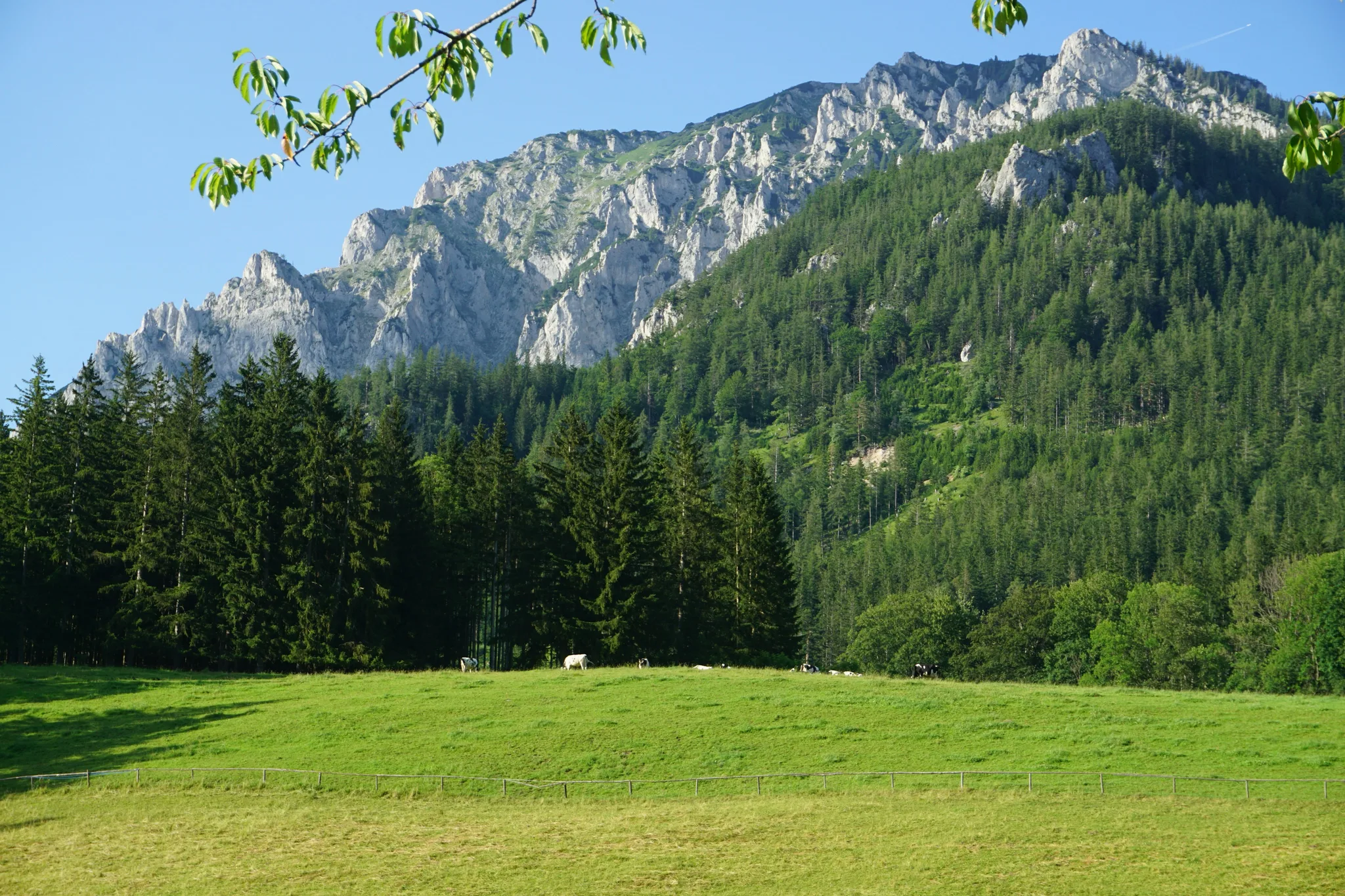
An Austrian alpine lake that floods each spring, submerging an entire hiking park — benches, bridges, and meadow paths lying 10 meters beneath crystal-clear emerald water, a ghost world of the familiar made impossibly strange.
In most years, the Grüner See in the Hochschwab region of Styria is a shallow mountain lake — 1 to 2 meters deep, clear, cold, surrounded by a regional park with walking paths, wooden footbridges, and benches positioned to face the surrounding limestone peaks. It is a pretty alpine lake, unremarkable by Austrian standards. Then spring arrives. Snowmelt from the Hochschwab massif begins to pour into the basin faster than the drainage system can remove it, and the lake rises. By late May or early June, the water depth reaches 10 to 12 meters, and the park is completely submerged. The benches, the bridges, the paths, the meadow grasses — the complete infrastructure of a summer hiking park — lies underneath.
The water that performs this submersion is meltwater filtered through Hochschwab limestone karst geology, which removes virtually all particulate matter before the water reaches the lake. Visibility underwater during peak flooding reaches 12 to 15 meters. The color of the water, driven by dissolved minerals from the limestone filtration, is an intense blue-green that gives the lake its name. Divers who entered the lake during the flood period found themselves swimming through a space physically identical to the park they had walked through two months earlier — benches still in position, footbridges intact, trails visible on the lakebed — except for the depth, the temperature (5–7°C), and absolute silence.
Photographs of Grüner See underwater began circulating widely in the early 2010s. The images — fish swimming above park benches, divers floating over wooden footbridges with the green water extending to the original tree line — spread quickly on social media platforms as examples of natural surrealism. The lake's proximity to Graz and its relatively straightforward diving made it practically accessible as well as photogenic, and diver visits increased substantially through 2015.
In 2016, Styrian authorities prohibited diving at the lake, citing documented damage to the submerged park infrastructure. Diver fin movements and equipment contact were eroding wooden structures and disturbing the lakebed sediment that maintained the water's exceptional clarity. The diving ban remains in effect. The lake can still be visited by foot during its dry season from July through November, when the water retreats and the park re-emerges, still intact, slightly reshaped by another year of flooding. Snorkeling arrangements are available in some years for permitted groups.
The annual cycle of submersion and emergence has been repeating here for as long as the park has existed, longer than any of its infrastructure. By July the snowmelt diminishes, the drainage catches up, and the water level drops back toward normal. The paths dry. The benches re-emerge. The park is walkable again until the following spring. What the flood leaves each time is not damage but a reminder — that the park's existence here is not permanent, that it disappears each year on a schedule set by the mountain, and comes back each time a little changed.
Safety information
Safety information is not available yet.
Before visiting this place, check current safety guidance, access rules, local restrictions, and official updates on other trusted websites. Our editorial team does not have verified safety information for this location at the moment; it will appear here later.