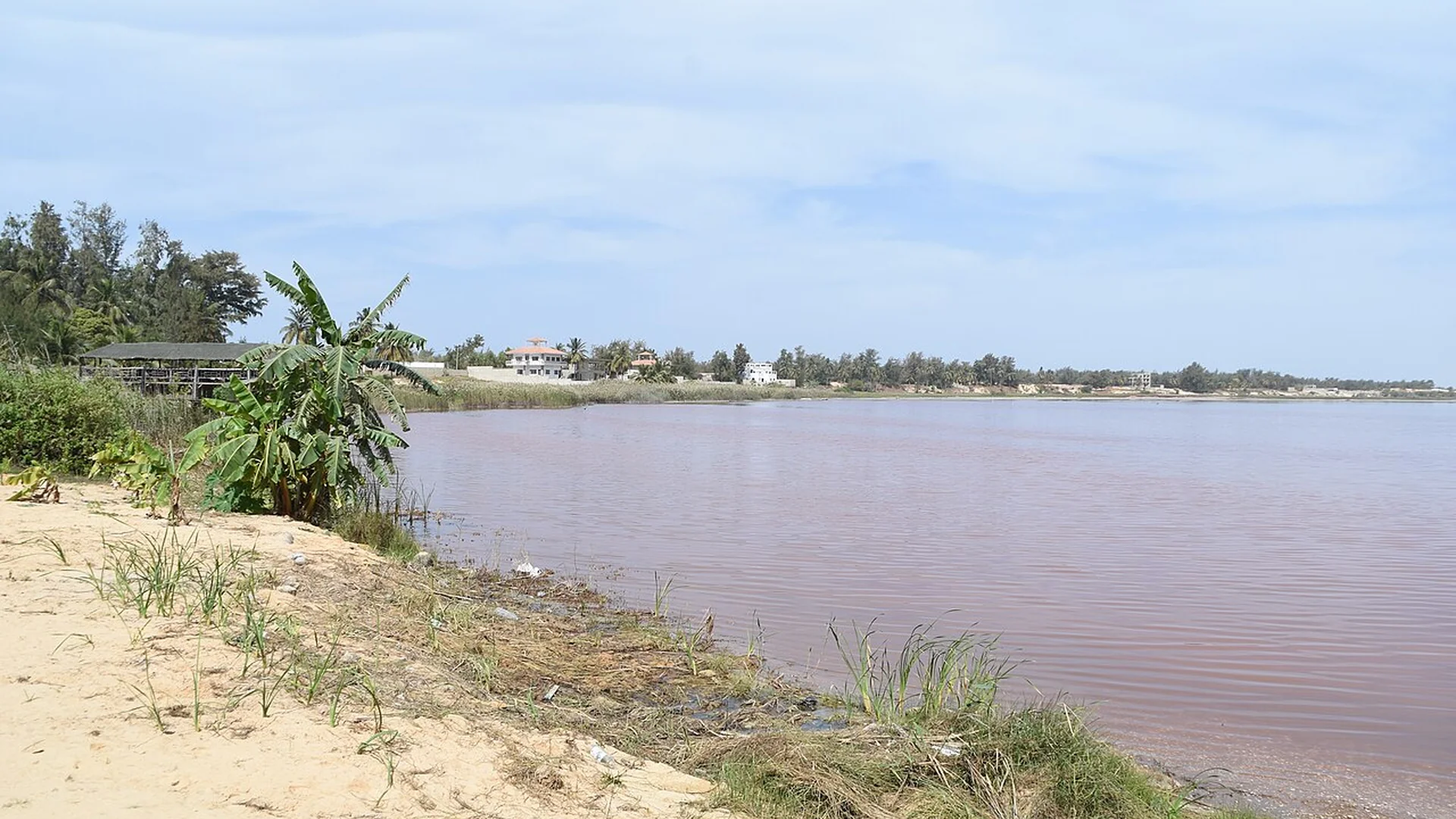
A lake of extraordinary bubblegum-pink water on the Cap-Vert Peninsula — colored by salt-loving Dunaliella salga algae that produce red pigment as protection against intense salinity, making it one of only a handful of pink bodies of water on Earth.
The pink is real. It is not filtered light, not a seasonal effect, not a camera trick. Lake Retba — Lac Rose in French — is genuinely, continuously, bubblegum pink.
The cause is biology. Dunaliella salga is a single-celled algae that thrives in extreme salinity. The salt content of Lake Retba reaches 40% in some parts — comparable to the Dead Sea, ten times the salinity of the ocean. To protect itself from the salt, Dunaliella salga produces a red carotenoid pigment. In high concentrations, across the entire lake surface, this pigment turns the water pink.
The intensity shifts with the sun. In the early morning, the water reads as pale rose. By midday, under direct sun, it deepens to vivid flamingo pink, occasionally approaching magenta. The contrast with the white salt crusts on the shores and the pale sand dunes that press against the lake's western edge creates a color palette that seems designed by someone with strong opinions.
Salt workers have harvested Lake Retba for centuries. They wade in waist-deep, scraping the salt from the lake bed with wooden tools, piling it into pirogues. Their skin is coated in shea butter to protect it from the salt; the combination of the pink water and the white-crusted workers and the wooden boats makes for something that looks staged but isn't.
The Dakar Rally used to finish here. The sand dunes that crowd the western shore are part of the same desert landscape that extends inland — a reminder that this pink lake sits at the edge of the Sahel, in a landscape of arid severity that makes its color stranger still.