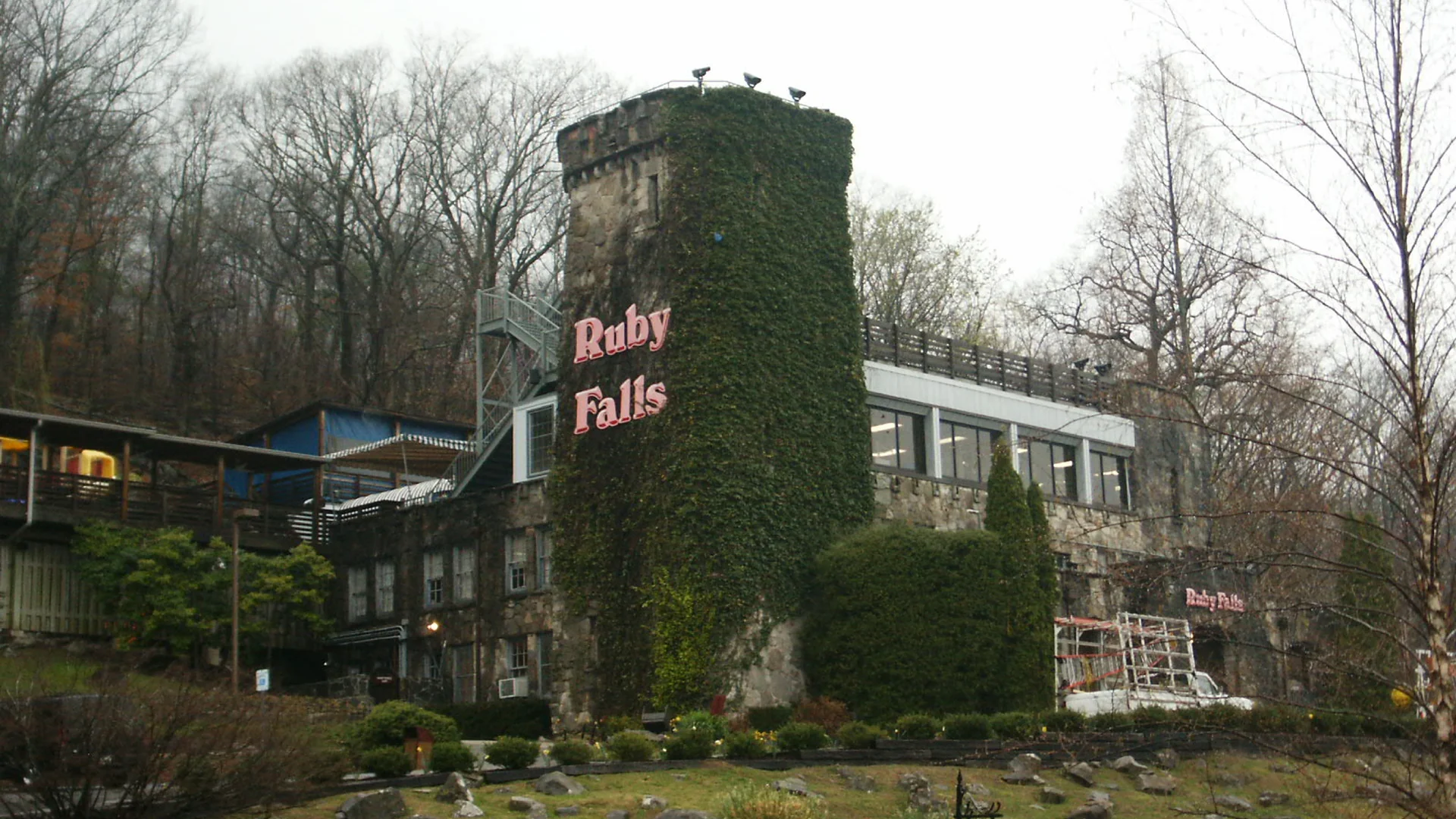
The deepest commercially accessible cave waterfall in the United States — a 44-meter cascade inside Lookout Mountain, discovered in 1928 when Leo Lambert drilled through 270 meters of limestone looking for an old Civil War cave, and named for his wife Ruby.
Leo Lambert wanted to find a cave. There had once been a natural cave entrance on Lookout Mountain that Civil War soldiers had used for shelter; the construction of a railroad tunnel had sealed it decades earlier. In 1928, Lambert began drilling a vertical shaft through the limestone, intending to break through to the old cave system and develop it as a tourist attraction.
At 97 meters, he broke through. But it wasn''t the cave he was looking for. He had entered a different cave entirely — a previously unknown cavern system. He explored it with his wife Ruby, crawling through passages, descending further through the mountain. At 270 meters below the surface, they found the waterfall: a 44-meter cascade falling from an opening in the cave ceiling into a pool surrounded by stalactites and limestone formations.
Lambert named it for his wife. He opened it to the public the same year he found it.
Ruby Falls has been a tourist attraction for nearly a century. Visitors descend by elevator to 270 meters, then walk 500 meters of cave passage to reach the falls. The cave is lit dramatically — the lighting has been updated over the decades, currently with color-changing LEDs that many purists find excessive, though the falls themselves are lit white and gold.
The experience of standing at the base of a 44-meter waterfall inside a mountain, 270 meters below the surface, with the stone walls close on all sides and the sound of falling water echoing in the enclosed space — the tourist infrastructure cannot diminish that. The mountain kept this secret for a very long time.