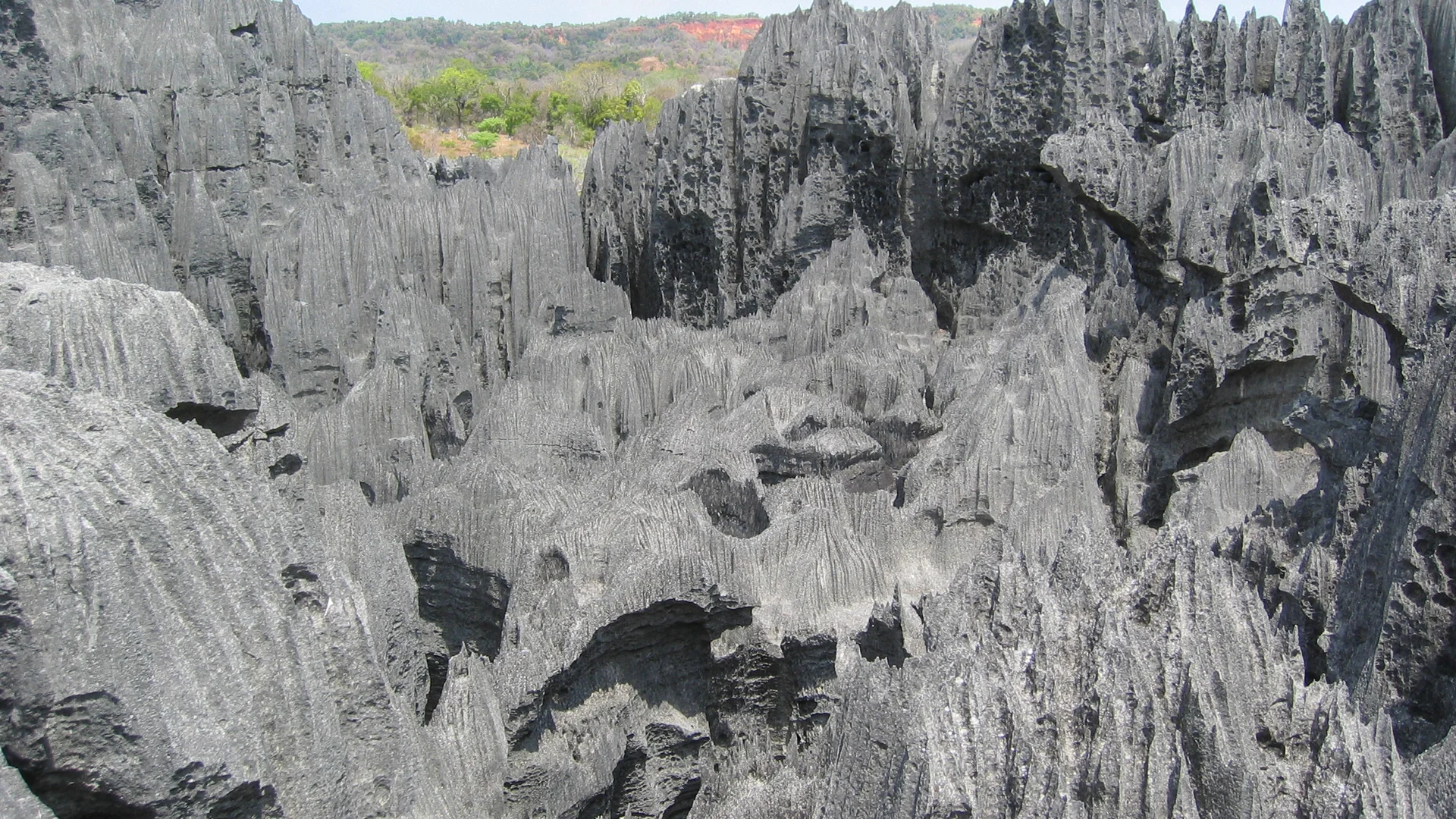
An ancient limestone plateau in western Madagascar where millions of years of erosion have carved a labyrinth of razor-sharp stone needles that shred anything that touches them.
The word tsingy in Malagasy means where one cannot walk barefoot. It is a profound understatement. The spires of Tsingy de Bemaraha would shred leather boots, skin, and bone with equal indifference. They are blades, compressed into a forest.
For millions of years, tropical rain dissolved the ancient seabed limestone from above while underground rivers carved it from below. The result is a karst plateau of extraordinary violence — thousands of pinnacles rising 30 metres from the earth, their flanks vertical and sharp enough to split a hand that rests against them. Crossing the tsingy requires suspended walkways, ropes, and harnesses. Locals believe spirits inhabit the stone.
The inaccessibility created an unintentional Eden. Lemur species found nowhere else on Earth shelter in the narrow crevices between spires, leaping between razor edges with astonishing precision. Birds nest in the pinnacle tops. Plants grow only in cracks where the stone relents. A whole ecosystem evolved specifically to survive inside a structure that destroys anything soft.
UNESCO declared it a World Heritage Site in 1990. Most of the interior has never been explored. The rock does not permit it.